
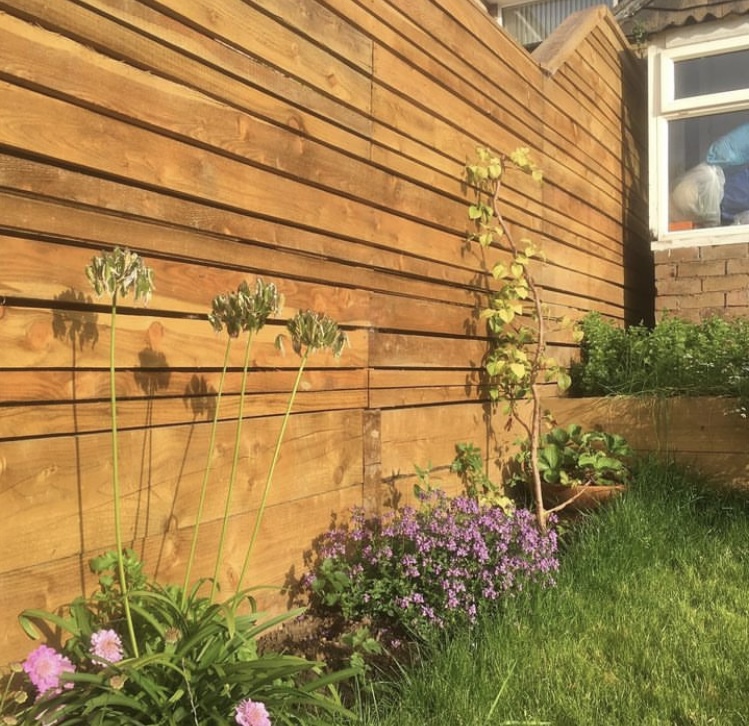
While my team and I do install prefabricated panels, I much prefer the creative freedom of custom building the fences I build. This means you get a one of a kind fence to suit whatever specification you wish, built to last with much more inherent strength than many of the prefab panels out there. From budget treated pine feather edge fencing to high end screens in cedar, we can supply and fit whatever you need to compliment your garden and provide a bit of security too. Building a custom fence allows posts to go into the ground wherever it is easiest to put them along the required fence line, saving lots of time and therefore money. With panels, posts have to go in a set distance apart from each other, and while this is fine, if a new post has to go straight through where an old one was, this can be problematic. It has been known for a single post hole to take hours to dig out even with a heavy duty demolition hammer for this very reason! Better to avoid the issue altogether given the choice.
I favour Durapost products where I’m not installing timber posts. These are made from durable metal and are very lightweight but strong. I avoid concrete posts and gravel boards where possible, because these have a habit of blowing out over time. Water can get into cracks in the material, and when it freezes this can open them further. Then, when there’s a storm the posts can break at these weak points – usually low to the ground – meaning your fence will fail. This is actually less likely to happen with a well installed timber or metal post.
The next step for fences with vertical boards are the horizontal rails which the palings are then fixed to. Sometimes these are angled according to the gradient of the ground. I like these to be strong, so will use a minimum of 3×2 inch timber – larger if called for. This assumes the posts are no more than 6 feet apart, though sometimes they have to be further than this – so larger bits of timber are required. Typically 3 rails are fitted. With fences with a horizontal pattern, these rails are not required, though I will fit battens to the back in this case, no more than 900mm apart. This prevents too much movement in the timber, which would ruin the look of your fence over time.
When it comes to timber posts, whether treated pine, larch, douglas fir or hardwood, we always put a haunch on the concrete at the base where they are set into the ground. This makes any water flow away from the post, avoiding any rot and increasing the lifespan of your fence. We then install gravel boards where necessary. Feather edge boards or a Yorkshire board pattern tend to have exposed cut ends due to the vertical nature of their look. For this reason it is a good idea to install a horizontal capping rail to protect them. I have an eye for the details and like everything to be just right, so any nails or screws will line through precisely if specified. This takes extra time, but in my opinion is well worth it.
 Needham Design Ltd